
Commercial access points are widely used in offices, hotels, shopping malls, schools, hospitals, warehouses, factories, and public venues. Compared with home routers, commercial APs usually need to support more users, more complex installation environments, and more stable wireless coverage.
In many commercial Wi-Fi projects, antenna design plays a key role in overall AP performance. A well-designed directional AP antenna can help guide wireless energy toward the target coverage area, improve signal quality, reduce unnecessary signal leakage, and support a more stable wireless connection experience.
Where Are Commercial APs Used?
Commercial APs are commonly installed in environments where many users or devices need to connect to the network at the same time. Typical applications include:
Office buildings and meeting rooms
Hotels, apartments, and residential complexes
Shopping malls and retail stores
Schools, campuses, and training centers
Hospitals and healthcare facilities
Warehouses and industrial buildings
Restaurants, exhibition halls, and public service areas
In these environments, the AP is not simply expected to “send out Wi-Fi.” It needs to provide stable coverage, support multiple users, reduce blind spots, and maintain reliable data transmission in a changing radio environment.
This is why commercial AP antenna design is more complex than it may appear.
How Much Throughput Can a Commercial AP Support?
The throughput of a commercial AP depends on many factors, including Wi-Fi standard, chipset, number of spatial streams, MIMO configuration, channel width, frequency band, client device capability, installation position, and interference level.
For example, Wi-Fi 6 and Wi-Fi 6E are designed to improve network capacity and efficiency in dense environments, while Wi-Fi 7 further increases wireless performance with wider channels, higher modulation, multi-link operation, and higher theoretical data rates.
However, the antenna itself does not directly define the maximum throughput of the AP. Instead, the antenna affects the wireless link quality. Better antenna design can improve signal strength, coverage direction, radiation efficiency, and connection stability. These factors can reduce packet loss and retransmission, helping the AP deliver better real-world performance.
In simple terms:
The chipset defines the theoretical throughput, but the antenna strongly affects how much of that performance can be used in real environments.
Signal Coverage Requirements for Commercial APs
Commercial APs often need to cover specific areas rather than radiating signals equally in every direction. For example, an AP installed on a wall may need to focus coverage toward a corridor, open office, hotel room area, or indoor public space. In these cases, a directional antenna can help improve coverage efficiency.
A directional AP antenna can be designed to match the target coverage area. It may help:
Improve signal strength in the intended direction
Reduce signal waste toward unnecessary areas
Support more stable connections for users within the coverage zone
Improve network planning in multi-AP environments
Reduce interference between neighboring APs
For commercial Wi-Fi deployment, signal coverage is not only about “longer range.” It is more about placing the signal where it is needed.
Why Do Internal Antennas for Commercial APs Need Custom Design?
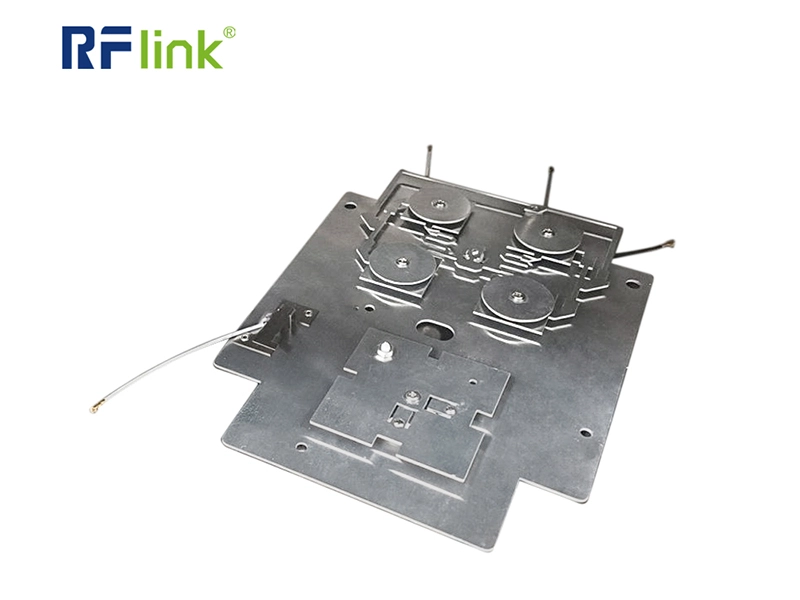
Most commercial APs use internal antennas because they offer a cleaner appearance, better product integration, and easier installation. But internal antenna design is highly dependent on the AP structure.
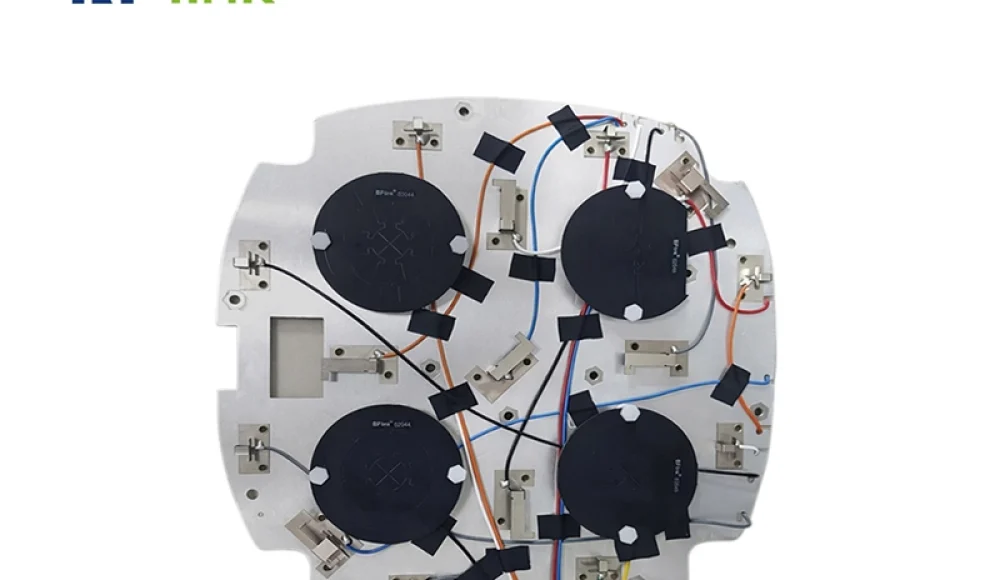
Unlike external antennas, internal antennas must work inside the product housing. Their performance can be affected by many factors, including plastic housing material, PCB layout, metal shielding, heat sinks, cables, screws, connectors, installation angle, and the distance between multiple antennas.
This is why internal antennas for commercial APs usually require custom design.
- Different AP Housings Require Different Antenna Structures
Every AP housing has its own mechanical design. The internal space, plastic thickness, antenna position, mounting method, and surrounding components may all be different.
Even if two APs support the same Wi-Fi bands, their internal antenna structures may not be interchangeable. A standard antenna that works well in one AP may perform poorly in another.
Custom antenna design allows the antenna to match the actual AP structure instead of forcing the AP to fit a standard antenna.
- Directional Coverage Must Match the Installation Scenario
Commercial APs may be installed on walls, ceilings, poles, or inside customized enclosures. Different installation methods require different radiation patterns.
For example, a wall-mounted directional AP may need stronger forward coverage, while a ceiling-mounted AP may require a different beam shape. If the antenna pattern does not match the installation scenario, the AP may have weak coverage areas, excessive signal leakage, or unstable user experience.
A custom directional antenna can be optimized according to the target coverage area.
- Multi-Antenna Layout Requires Careful Isolation
Modern commercial APs often use multiple antennas to support MIMO and multi-band operation. This means several antennas may need to work inside a limited space at the same time.
If the antenna layout is not properly designed, the antennas may interfere with each other, reducing isolation, efficiency, and overall wireless performance.
Custom internal antenna design helps balance antenna placement, isolation, polarization, radiation pattern, and matching performance.
- The AP PCB and Components Affect Antenna Performance
The antenna cannot be designed separately from the AP hardware. The main PCB, RF front-end, grounding structure, shielding cover, cables, and nearby components can all influence antenna performance.
In many projects, antenna tuning and matching must be done together with the actual AP PCB and enclosure. This is one of the main reasons why commercial AP internal antennas need customized engineering support.
- Real Performance Must Be Verified Through Testing
Antenna design is not only about drawings and simulation. After the sample is built, it needs to be tested and optimized.
Typical testing may include VSWR, return loss, efficiency, gain, radiation pattern, isolation, and real application performance. For commercial AP projects, testing helps ensure that the antenna can deliver stable performance inside the final product structure.
RF Link Antenna’s Custom AP Antenna Design Support
RF Link Antenna provides custom antenna design and manufacturing services for commercial APs, wireless routers, IoT gateways, industrial communication devices, and other wireless products.
For commercial AP directional antenna projects, our engineering team can support:
Frequency band and performance requirement analysis
AP structure and installation space evaluation
Internal directional antenna design
Multi-antenna layout optimization
Matching and tuning based on the actual PCB and housing
Sample development and performance testing
Production delivery support
When standard antennas cannot meet your AP structure, coverage direction, signal strength, or installation requirements, a customized internal antenna solution can help improve the final wireless performance.
Conclusion
Commercial APs are used in demanding wireless environments where coverage, capacity, stability, and installation flexibility all matter. While the AP chipset determines the theoretical throughput, antenna design has a direct impact on real signal coverage and connection quality.For internal directional AP antennas, customization is often necessary because every AP has a different housing, PCB layout, installation method, and coverage requirement.RF Link Antenna can help develop custom commercial AP antenna solutions that match your product structure and wireless performance goals, from antenna design and tuning to testing and production.